• Skip to main content
  • Skip to secondary navigation
  • Skip to primary sidebar
  • Skip to footer

M. Darusha Wehm

Science fiction and mainstream books by award-winning author M. Darusha Wehm

  • News
  • Buy Books
    • Digital Download Store
    • Get Print Books
  • Podcasts
  • About
    • Bio
    • Demographic Info
    • Bibliography
    • Press Kit
    • Privacy Policy
  • Contact
  • Short Stories
    • Bodies at Rest, Bodies in Motion
    • Fire. Escape. – Sample
    • The Foreigner
    • Major Tom and the Lucky Lady
    • The Interview
    • Lucidity
    • Fame
    • Chekhov’s Phaser
    • Career Opportunities
  • Science Fiction
    • Beautiful Red
    • Children of Arkadia
    • Andersson Dexter
      • Self Made
      • Act of Will
      • The Beauty of Our Weapons
      • Pixels and Flesh
    • Modern Love and other stories
    • The Voyage of the White Cloud
    • Retaking Elysium
    • The Qubit Zirconium
    • Hamlet, Prince of Robots
    • Shores of a New Horizon
    • The Department of What It (Really) Means to be Human
    • As Darkly Lem
      • Transmentation | Transience
      • Transmentation | Transgression
  • Mainstream Fiction
    • Devi Jones’ Locker
      • Packet Trade
      • Sea Change
      • Storm Cloud
      • Floating Point
    • The Home for Wayward Parrots
  • Anthologies
    • Many Worlds or The Simulacra
    • Immigrant Sci-Fi Short Stories
    • The Stars Beyond
    • Year’s Best Aotearoa New Zealand Science Fiction & Fantasy, Volume 4
    • KeyForge: Tales From the Crucible
    • Trans-Galactic Bike Ride
    • Fireweed: Stories from the Revolution
    • Year’s Best Aotearoa New Zealand Science Fiction and Fantasy: Volume I
    • The Dame Was Trouble
    • Dystopia Utopia Short Stories
    • Science Fiction Short Stories
    • Procyon Press Science Fiction Anthology 2016
    • Use Only As Directed
  • Games/Interactive
    • A Death in Hyperspace
    • The Martian Job
    • Alexander Systems
    • You Do You
    • if ink could flow backward
  • Books

Fiction vs. Reality

June 21, 2012

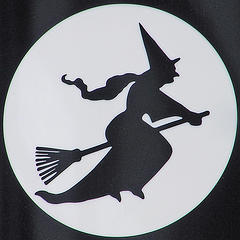
Image by Leo Reynolds

I read a very interesting article on Pankhearst about historical and modern witchcraft trials and the connection with popular fiction.

“Today, it seems very popular for writers – specifically women – to write supernatural claptrap about the magical descendants of the victims of Salem, or about witches who survived, without giving even a moment’s thought to the fact that they are, in fact, condoning the institutionalized torture and murder of – predominantly – women and, figuratively speaking, pissing all over the graces [sic] of tens of thousands of innocent women.”

Horrific events in fiction are markedly different from the same things in real life. Indeed, they are often required for the story to be interesting (murder mysteries, war stories, etc.).

This also makes me think of a dichotomy in my own community: many of us cruising sailors enjoy pirate themed events. We say “Yaar,” dress up in tricornered hats, and drink our jiggers of rum. However, we also deal with real piracy personally – I met a family who were later taken hostage in the Indian Ocean and I’m only one degree removed from the crew of Quest who were murdered after being kidnapped by pirates.

Part of the reason for this apparent conflict is that the “fun” pirates are an entirely different thing from the real ones – they are fiction. People need to be able to explore the dark side of our personalities, and fiction is a good way of doing that. If we say that some events are “off-limits” to fiction, even to fiction which treats those events as fodders for humour, then we are repressing the exploration of those ideas.

All that being said, I wonder how many people who enjoy “supernatural claptrap about the magical descendants of the victims of Salem” are aware of the history behind these stories. I’d like to think that reading stories based on real events would help spur people to learn a little about those events.

It’s an interesting question for writers and other creative artists about where (if anywhere) to draw the line.

Share this:

  • Share on X (Opens in new window) X
  • Share on Facebook (Opens in new window) Facebook
  • Email a link to a friend (Opens in new window) Email
  • More
  • Share on LinkedIn (Opens in new window) LinkedIn
  • Share on Tumblr (Opens in new window) Tumblr
  • Print (Opens in new window) Print

Like this:

Like Loading...

Filed Under: News Tagged With: current events, writing

Previous Post: « Paperbacks available in Europe
Next Post: Experience-Taking Through Fiction (or how to get readers to love your characters) »

Reader Interactions

Comments

  1. Nobilis Reed says

    June 21, 2012 at 8:36 am

    I remember when the Teenage Mutant Ninja Turtles first hit the mainstream. Some art nerds I knew decried the bastardization of the names, claiming that anyone who did that in a mere ‘comic book’ wasn’t deserving of the title ‘artist.’

    The Metropolitan Museum of Art hung huge banners from their front entrance reading simply “Leonardo, Donatello, Michelangelo and Raphael”

    I imagine that 0.01% of the boys who were into the Turtles ever cracked a book about renaissance art… but that still would have been thousands who didn’t otherwise.

  2. Paul Perkins says

    June 24, 2012 at 9:16 am

    The real persecution of so-called “witches” was horrible, and there is value in remembering just how horrible it was. But saying that anyone who touches on the history of witch trials for entertainment purposes, without going into depth on the horribleness of it all, is “condoning” it? That’s just self-righteous posturing.

Primary Sidebar

Cover for The Department of What It (Really) Means to be Human by M. Darusha Wehm. A grey background with yellow text and line art of small, round pills.

The Department of What It (Really) Means to be Human

The Department of What It (Really) Means to be Human is told with a consistent gentleness, and generosity, that gives [its] philosophical questions room to breathe.
— Niall Harrison, LOCUS February 2026

A near-future real-life society transitions to a post-capitalist, post-climate change reality.

The Department Of What It (Really) Means To Be Human is a thoughtful, optimistic novel set in a near-future Aotearoa New Zealand where an investigator navigates a newly postcapitalist world in their search for a missing artist.

When the world changed, Emerald Hutson closed the door on their old life. Now they’re a freelance investigator for the Grants and Stipends Office, augmenting basic income with cases that are both simple and easily resolved.

Learn More

Free Stories

Fame

"Pupusas?" The woman's nasal voice reached Randall at the back of the bus before he saw her pushing her way down the aisle. He could smell the warm, raw meat smell of his own sweaty body, and his … Read More... about Fame

Major Tom and the Lucky Lady

I was balancing a cup of tea in one hand, while hanging on to the side of the companionway hatch with the other. I climbed into the cockpit sideways, compensating for the roll of the boat. I was only … Read More... about Major Tom and the Lucky Lady

Lucidity

last night I had the most wonderful dream Carly moaned softly in her sleep, and rolled over. She dreamed and dreamed, and when she woke, she found that she still had the lingering shadow of a … Read More... about Lucidity

Publications

  • . ….. ..story .. time
  • A Most Elegant Solution
  • A Most Elegant Solution (audio)
  • A Thorn in Your Memory
  • A Wish and a Hope and a Dream
  • Alexander Systems
  • Fear of Lying
  • Force Nine
  • Good Hunting
  • Home Sick
  • Home Sick (audio)
  • Homecoming
  • I Open My Eyes
  • if ink could flow backward
  • Microfiction @Thaumatrope
  • Modern Love
  • Modern Love (audio)
  • Preventative Maintenance
  • recursion
  • Reflections on a Life Story
  • Showing the Colours (audio)
  • The Care and Feeding of Mammalian Bipeds, v. 2.1
  • The Interview
  • The Stars Above Eos
  • War Profiteering
  • War Profiteering (audio)
  • we are all energy

Footer

Social

  • Bluesky
  • Facebook
  • Mastodon

Connect

  • Email
  • Goodreads
  • RSS

Poetry

  • . ….. ..story .. time
  • 140 and Counting
  • creation myth
  • Force Nine
  • how to make time
  • if ink could flow backward
  • recursion
  • the chrononaut
  • we are all energy

Non-fiction

  • 90ways.com

Elsewhere

  • Darkly Lem
  • Many Worlds
  • Mastodon

Copyright © 2026 M. Darusha Wehm

%d